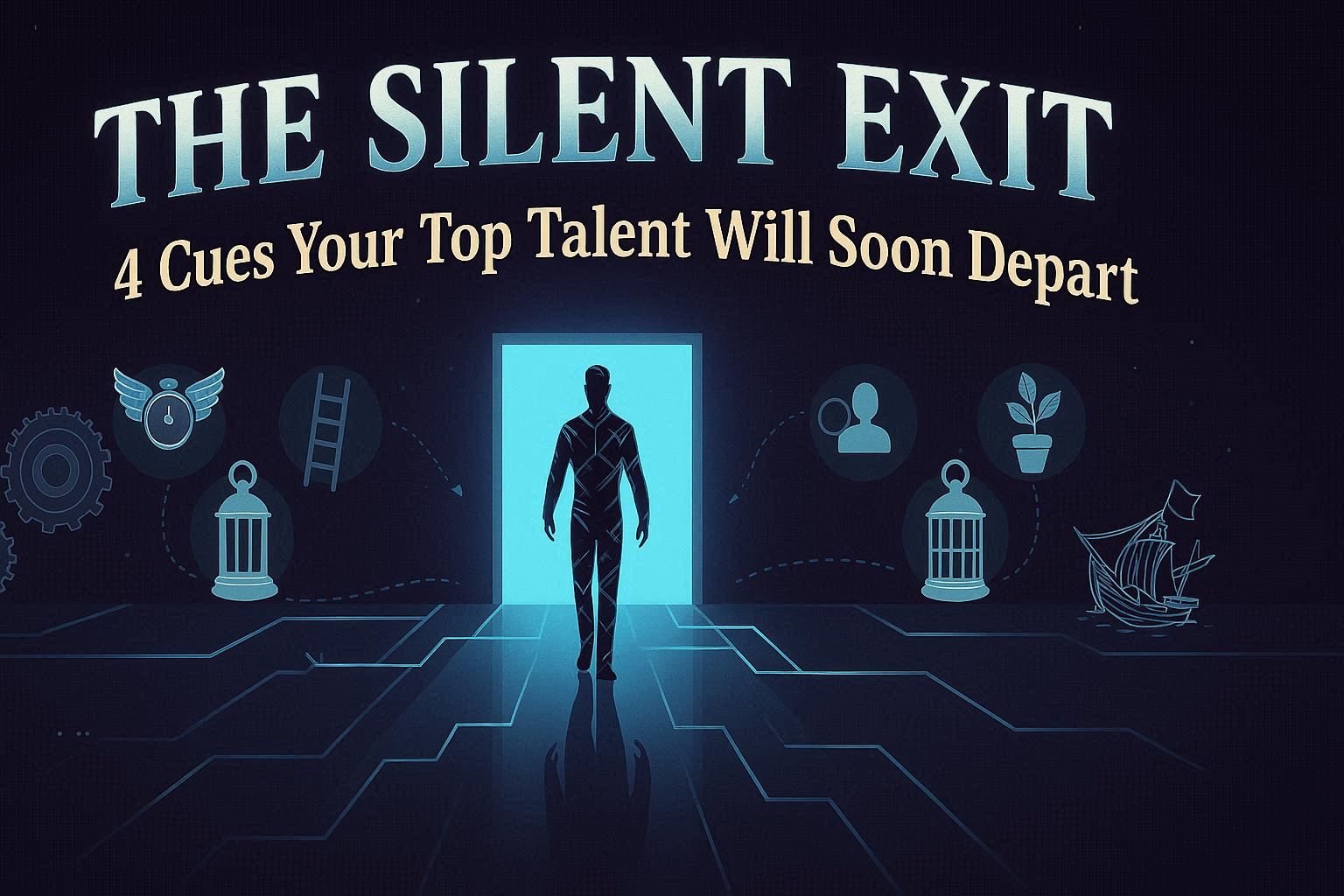
The cost of replacing a high-performing employee is estimated at 1.5x to 2x their annual salary. However, the operational disruption often costs far more. Most resignations come as a "shock" to leadership, but looking back, the data always existed.
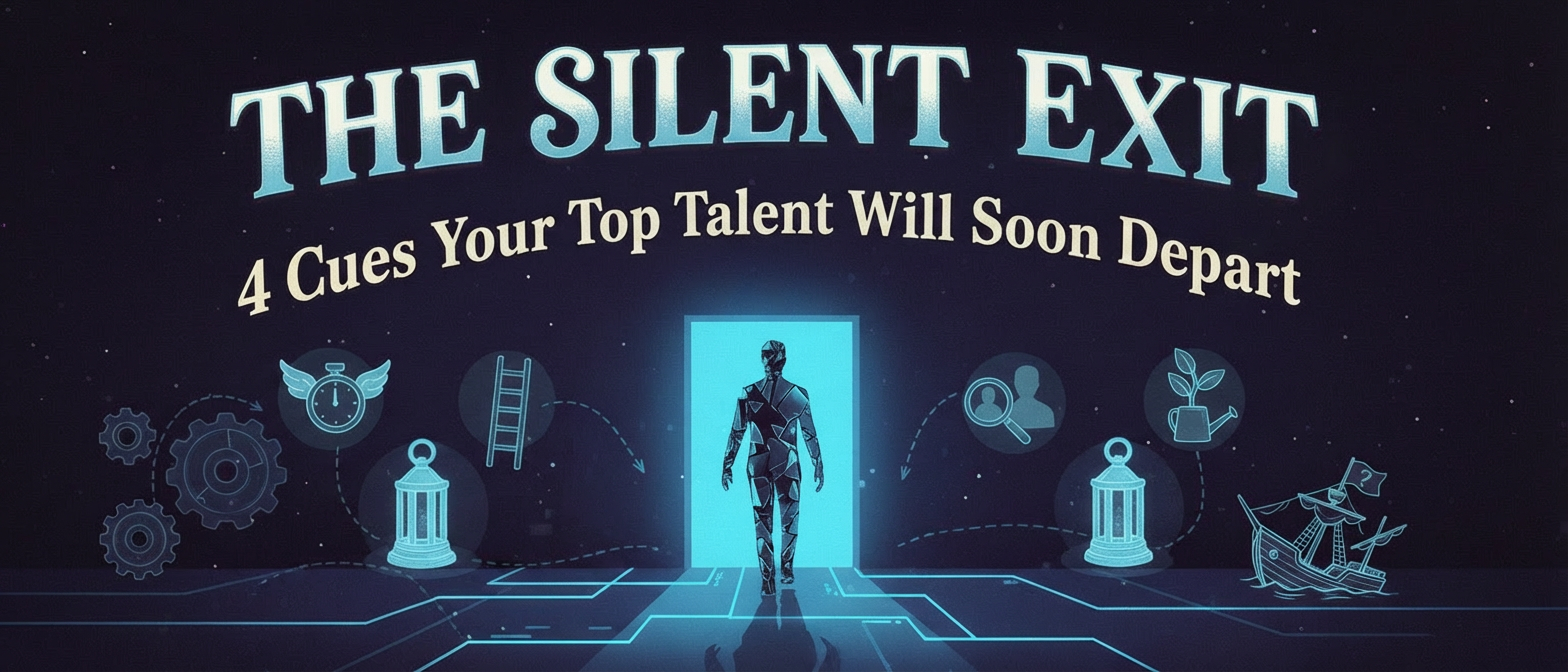
Retention is not about luck it is about pattern recognition. Based on behavioural analytics, here are the 4 distinct warning signs that indicate a valuable employee has mentally checked out and the strategic interventions to reverse the trend.
1
Velocity Decoupling (Productivity Decline)
The Signal: A sudden drop in output is obvious. The more dangerous signal is "Velocity Decoupling" when a high-performer shifts from proactive innovation to reactive execution. They stop offering new ideas in meetings and simply do exactly what is asked, no more, no less.
The Intervention:The "Stay Interview": Don't wait for the exit interview. Schedule a "Forward-Looking Review." Ask: "If you could redesign your role from scratch today, what would you cut?" Why it works: It re-engages their sense of agency before they seek it elsewhere.
2
Micro-Absenteeism & "Remote Drift"
The Signal: It starts small. A camera turned off during Zoom calls. A lag in Slack response times. Frequent half-day PTO requests for "appointments." In a remote/hybrid environment, silence is the loudest data point.
The Eiden Framework:Track the Trend, Not the Incident: One doctor's appointment is life. Three Friday afternoons off in a month is a pattern. The Policy Pivot: Ensure your PTO policy requires sufficient notice (e.g., 2 weeks for non-emergencies). This isn't about control it's about forcing communication. If an employee resists communicating their schedule, they are already disengaging from the team dynamic.
3
The "Apathy Shift" (Lack of Enthusiasm)
The Signal: The opposite of engagement isn't anger; it's indifference. When a formerly passionate employee stops debating strategy or pushing back on bad ideas, they have entered the "Apathy Zone." They have decided it is no longer worth the emotional energy to care.
The Intervention:Delegation Audit: Often, apathy comes from boredom. Analyze their workload. Are they doing work that is below their pay grade? Action: Delegate their repetitive tasks to junior staff or automate them (using tools like n8n), freeing the high-performer to tackle high-visibility challenges.
4
Cultural Friction (Attitude Change)
The Signal: A sudden shift toward cynicism, "edgy" behaviour, or toxicity is often a defence mechanism. The employee feels trapped and resents the organisation for it. This behaviour is contagious and can poison team morale within weeks.
The Decision Matrix:Scenario A (Top Talent): If this is a star player, they are crying out for recognition. Implement immediate "Impact Recognition" publicly acknowledging specific wins to re-anchor them to the tribe. Scenario B (Average Talent): If performance is average and attitude is toxic, prepare the off-boarding protocol. You cannot save everyone, but you must protect the culture.
Conclusion:
Detection is the Best Defence
Recognising these signs allows you to move from "Damage Control" to "Pre-emptive Retention." As a manager, your job is not just to manage tasks, but to manage the energy and trajectory of your human capital.