Entrepreneurship is rarely about mastering the supply of a product it is entirely about mastering the generation of demand. You can have the most innovative supply chain in the world, but if you cannot predictably generate demand, you are not in business.
At Eiden Group, when we audit companies that have hit a growth ceiling, the diagnostic often reveals a hard truth: the founder sucks at sales, putting the entire enterprise at risk.
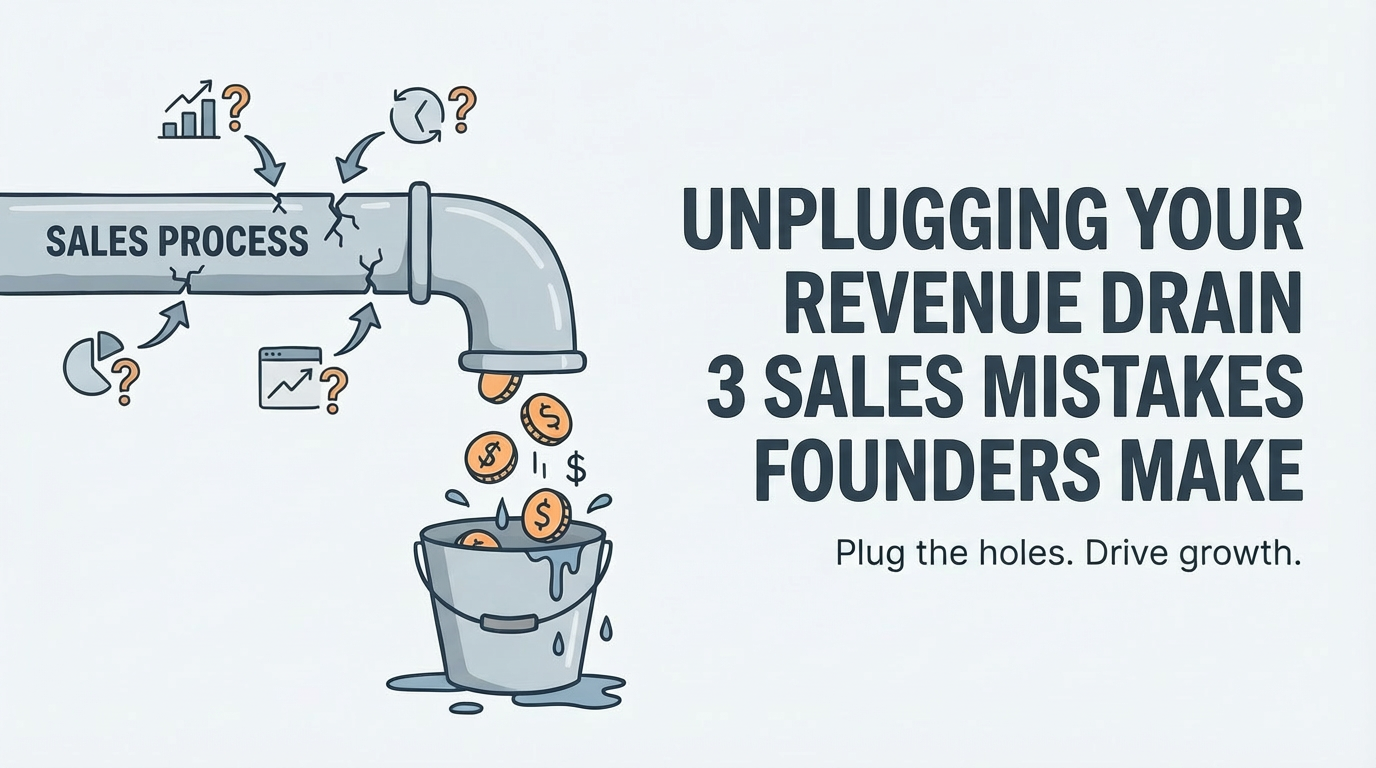
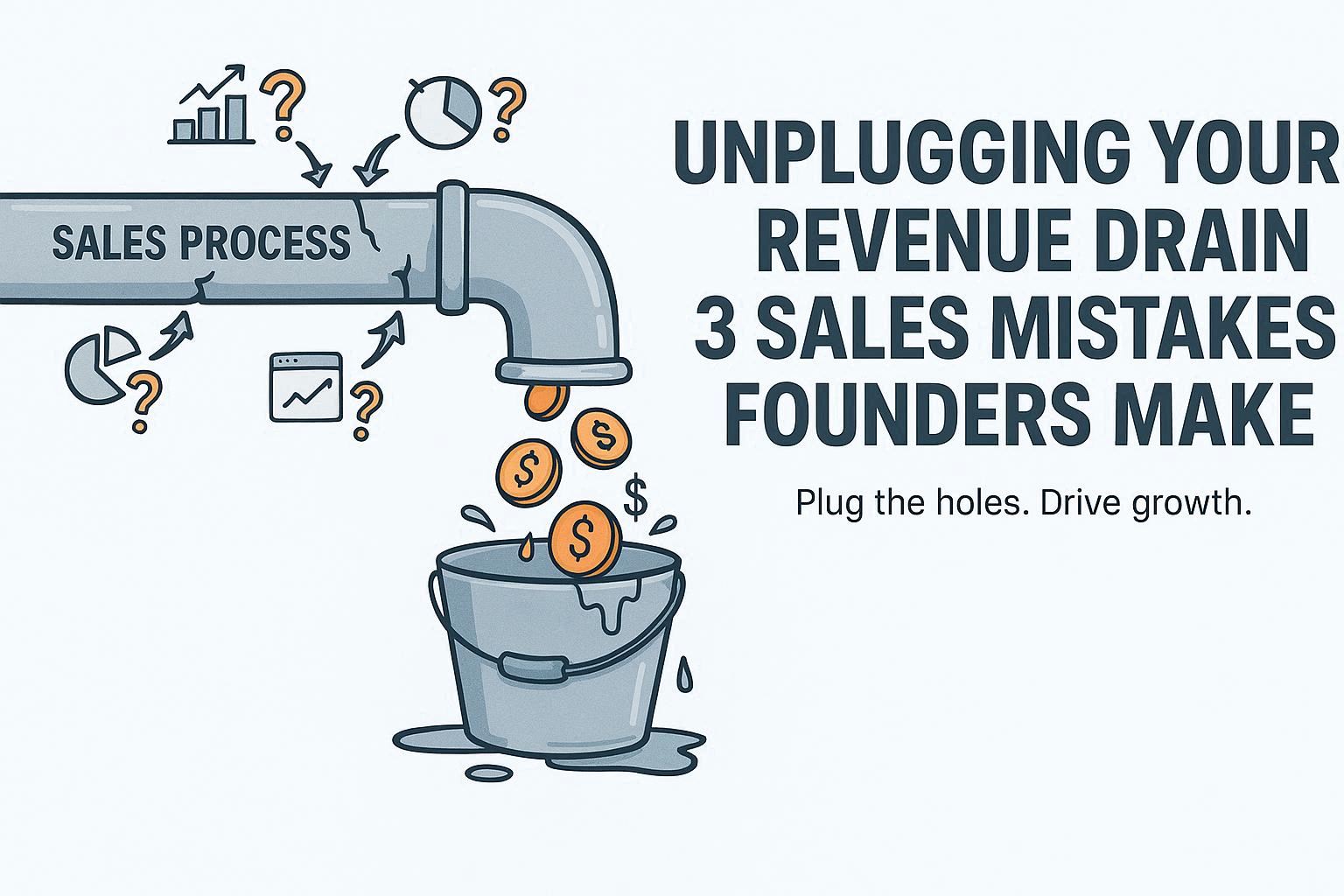
If you are relying on passion rather than a predictable B2B sales process optimization strategy, you are leaving millions on the table. Here are the three core reasons founders fail at sales, and the architectural frameworks required to fix them.
1
The "Amateur Hour" Trap: Failing to Treat Sales as a Profession
Sales is a multi-billion dollar global profession, yet many founders treat it as an ad-hoc conversation.
Professional salespeople do not wing it. They understand that customers cannot read minds and require structured visual aids. To transition from founder-led hustle to a professional enterprise sales motion, you must implement:
Rigorous Training: Engaging in active roleplay to test and continuously refine your sales scripts.
Sales Aids: Utilizing professional brochures, slide decks, PDFs, and clear terms and conditions forms.
Data Tracking: Meticulously tracking conversion numbers and data to improve the craft over time.
2
The Inconsistent Pipeline: Ignoring the LAPS Rhythm
Success in business requires a predictable rhythm. Founders often experience a "feast or famine" cycle having a great week where they close three deals, followed by two weeks of zero sales.
To build predictable enterprise revenue, you must abandon luck and establish the LAPS Rhythm:
Leads: A consistent volume entering the funnel weekly (e.g., 50 leads).
Appointments: Converting those leads into booked discovery calls (e.g., 6 appointments).
Presentations: Delivering tailored pitches to qualified prospects (e.g., 5 presentations).
Sales: Closing the deal predictably (e.g., 1 sale).
By establishing a predictable 50-6-5-1 ratio, you shift from hoping for revenue to mathematically engineering it.
INTERACTIVE ACTIVITY: The 2-Minute Revenue Audit
Take 120 seconds to answer these three questions honestly. If you answer "No" to any of them, your sales process is leaking revenue.
Do you know your exact LAPS ratio from last quarter? (Yes / No)
Do your reps use standardized, tested visual aids for every pitch? (Yes / No)
Do you have a documented process for handling objections? (Yes / No)
If you answered "No," continue to Step 3 below.
3
The Chaotic Pitch: Missing the Conversational Arc
Great salespeople follow a highly predictable conversational pattern that guides the prospect from curiosity to commitment. If your sales calls lack this structure, you will lose control of the deal.
Here is the blueprint for a high-converting sales conversation:
Phase 1: The SetupFraming: This occurs before you even speak. It is the prospect's pre-call experience of you, Your marketing materials, industry awards, and high-status reputation.
Rapport & Permission: Establish chemistry, then explicitly ask permission to run a structured process rather than just having a "general chitchat".
Phase 2: The DiagnosticCurrent Situation: Ask targeted questions to uncover what they are currently experiencing and what they are unhappy with.
Desired Situation: Determine their ultimate goal (e.g., "If I could wave a magic wand, what would you like to have happen?").
The Gap & Obstacles: The distance between their current and desired state is the gap. Identify the specific obstacles that have prevented them from achieving this on their own.
Phase 3: The Presentation
Once you understand their criteria, ask permission to share insights.
Insights: Shine a spotlight on their blind spots. Share high-level, industry-specific data they haven't considered (e.g., "Did you know 94% of people fail at this because of X?").
Method: Introduce your methodology for getting them past their obstacles (e.g., a 3-step process), completely separate from your specific product.
Solution: Finally, present your packaged solution, including deliverables and pricing tiers.
Phase 4: The Close
Do not let the conversation fade out. You must Discuss their feedback and objections. Finally, Complete the interaction by either handling objections to close the sale, or immediately scheduling a firm follow-up time.